





SeanVega Trading
A running archive of USDJPY views from Tactical Positioning.

Drag, or hold Alt and press the left or right arrow, to reorder within a group. Publications you write for stay ahead of subscriptions. Changes save automatically.
A running archive of USDJPY views from Tactical Positioning.
USDJPYHistorically, Japan's FX interventions tend to come in waves, not as one-off events. If April 30 was indeed intervention, more operations may follow. We outline the repercussions of such intervention in the chart below.
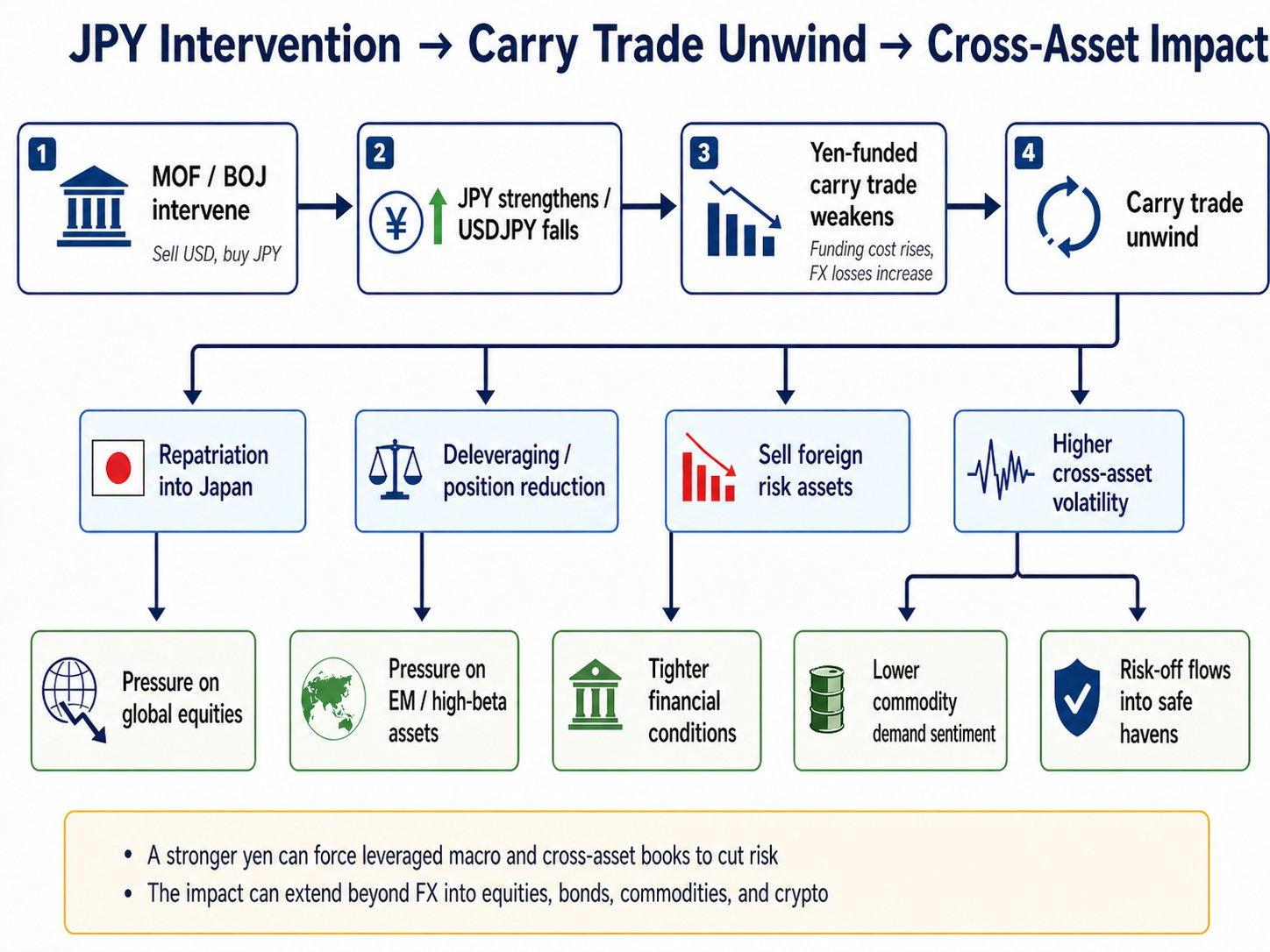
USDJPY

USDJPYFor USDJPY to initiate a self-reinforcing downward spiral, the BOJ must sustain a break below the 155.5 level for a few days. Otherwise, the path of least resistance remains to the upside.
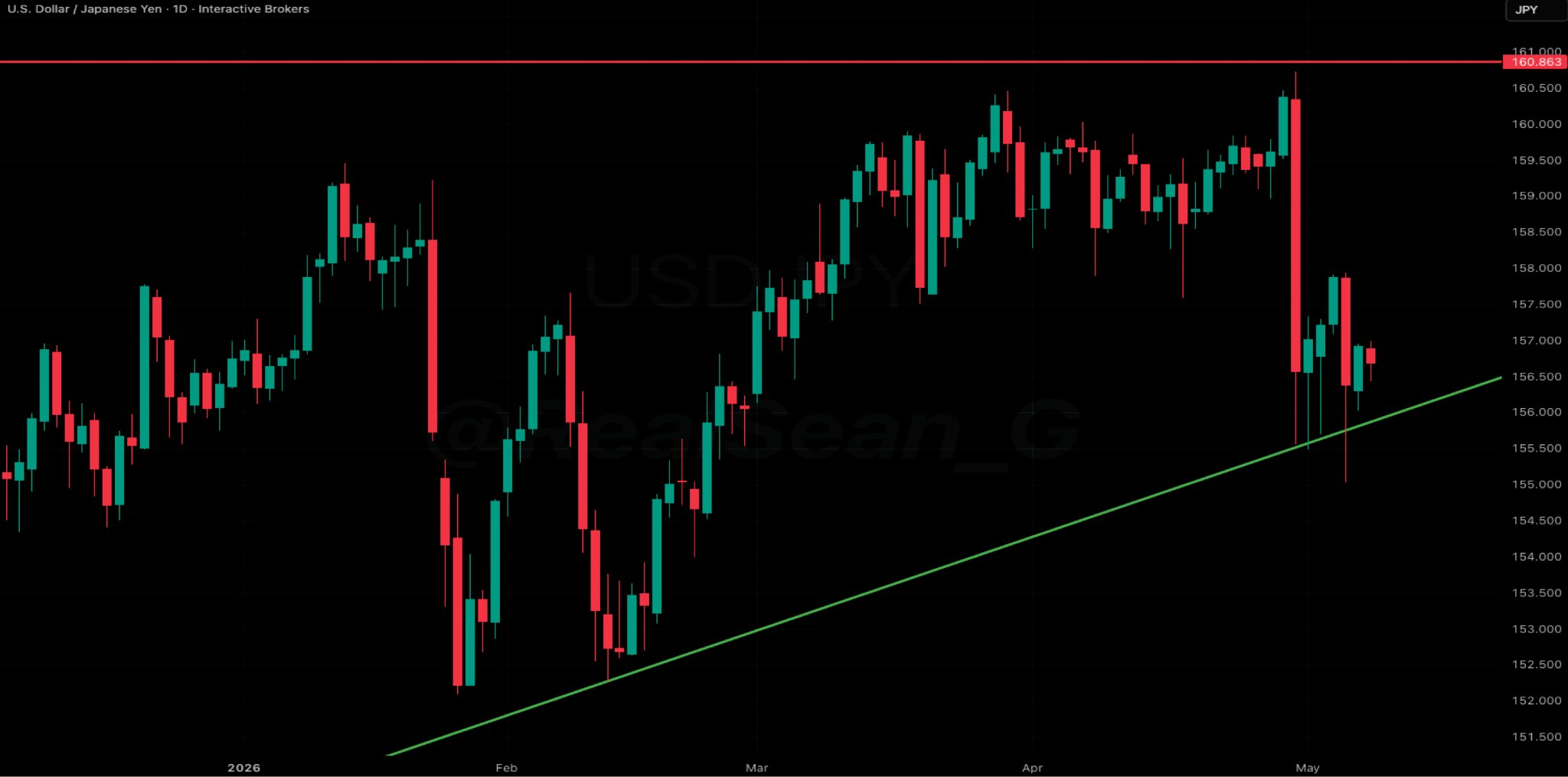
USDJPYFor USDJPY to initiate a self-reinforcing downward spiral, the BOJ must sustain a break below the 155.5 level for a few days. Otherwise, the path of least resistance remains to the upside.
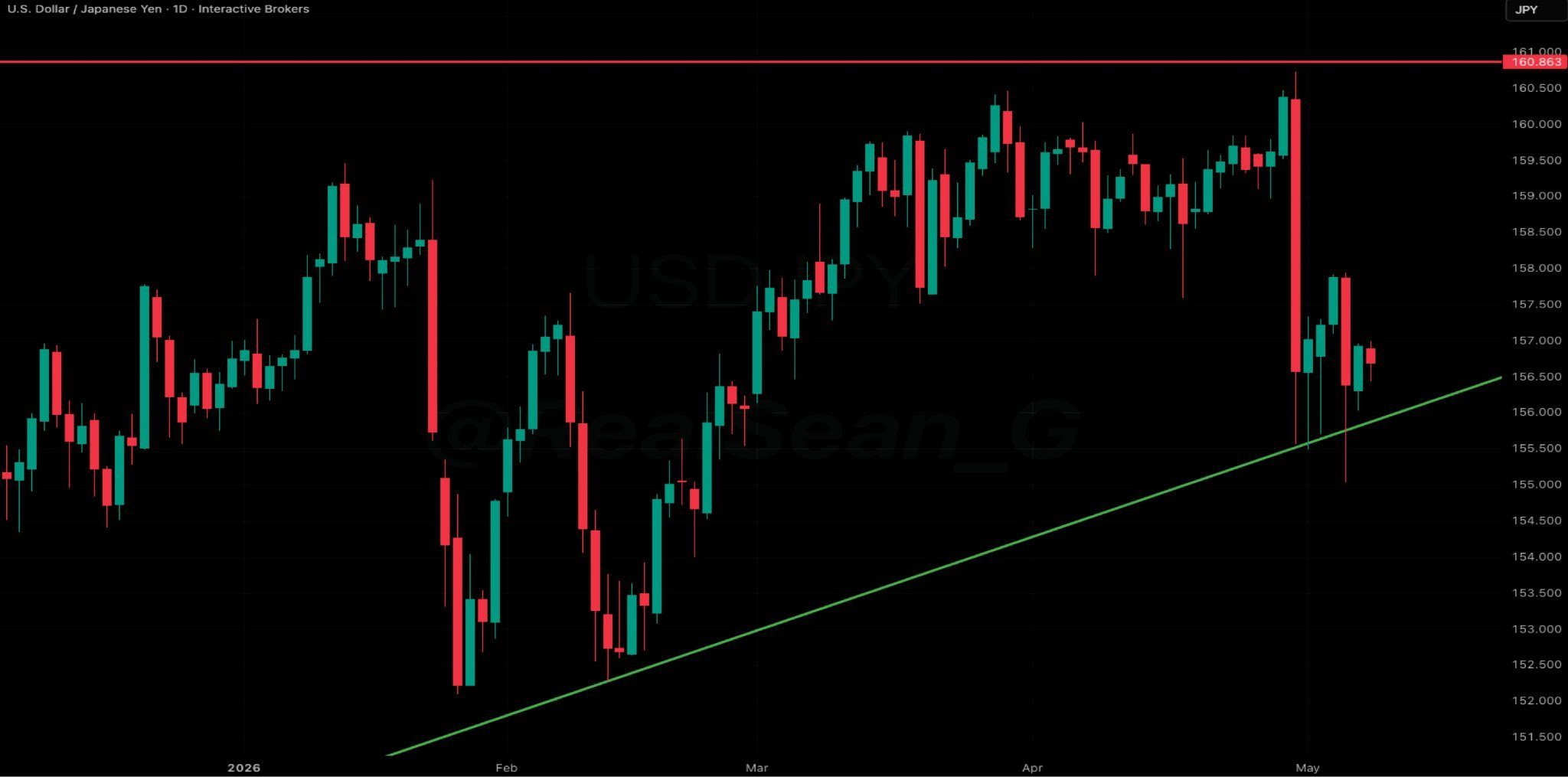
USDJPYBased on the latest MOF report, Japan spent $70billion defending the yen last month. Back in April-May 2024, it spent $60billion, and in July 2024 it spent $35billion. With oil still elevated, and Japan importing almost all of its oil, USDJPY has continued to grind higher despite the intervention.
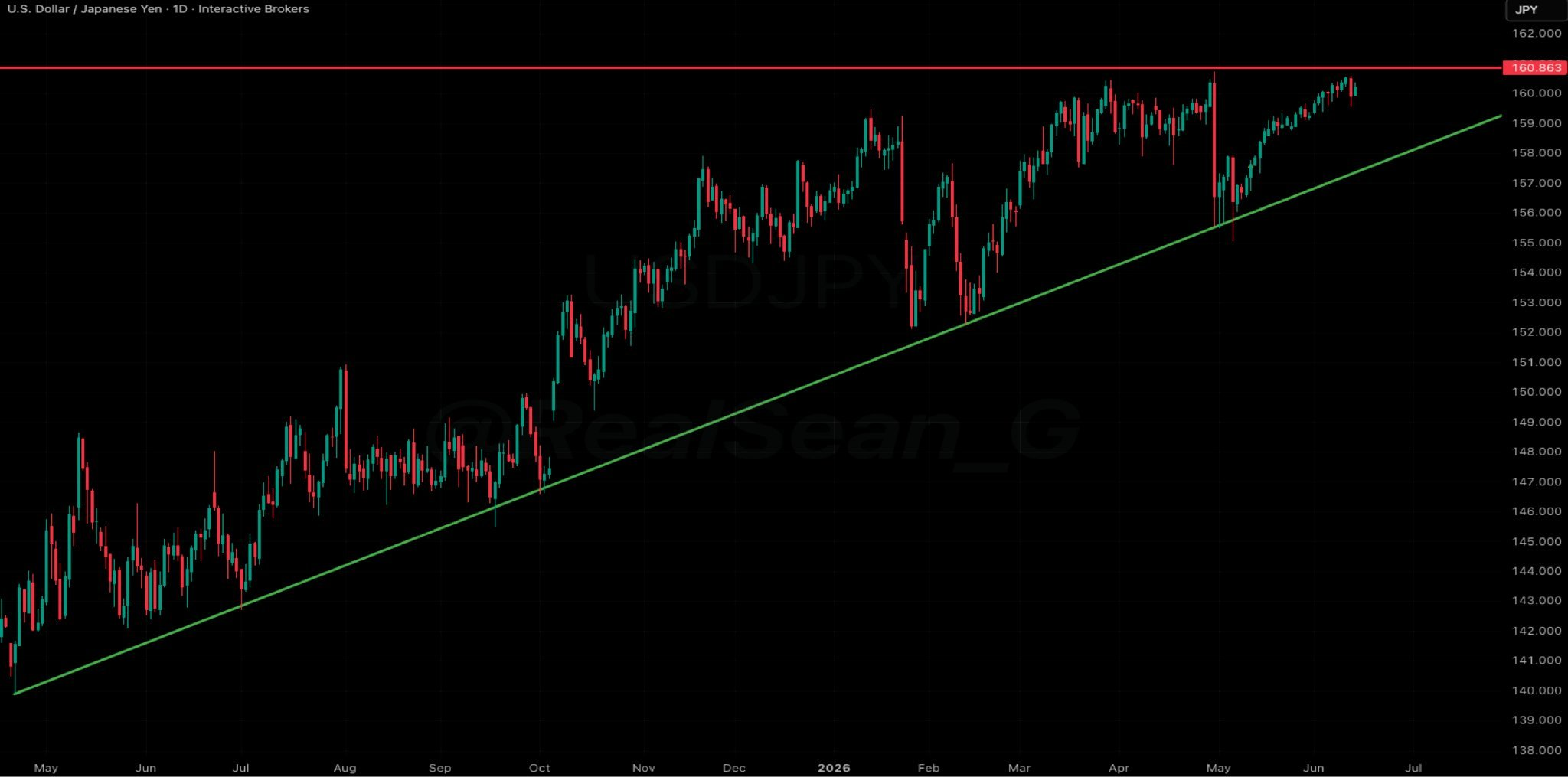
I showed the uptrendline support on the day the first intervention occurred, and that support has held so far. As mentioned before, the MOF needs to buy yen aggressively enough to push USDJPY below 155 and sustain it there for a few days before the market can build downside momentum. Otherwise, the path of least resistance remains higher.
That said, as we approach 160, I would take partial profits and tighten risk. Japan remains one of the largest FX reserve holders in the world, and it still has both the firepower and willingness to intervene again.
Ultimately, unless we see the Strait return to normal and/or a BOJ rate hike, USDJPY should break above 160. But I would not chase into that level given the risk of another intervention.
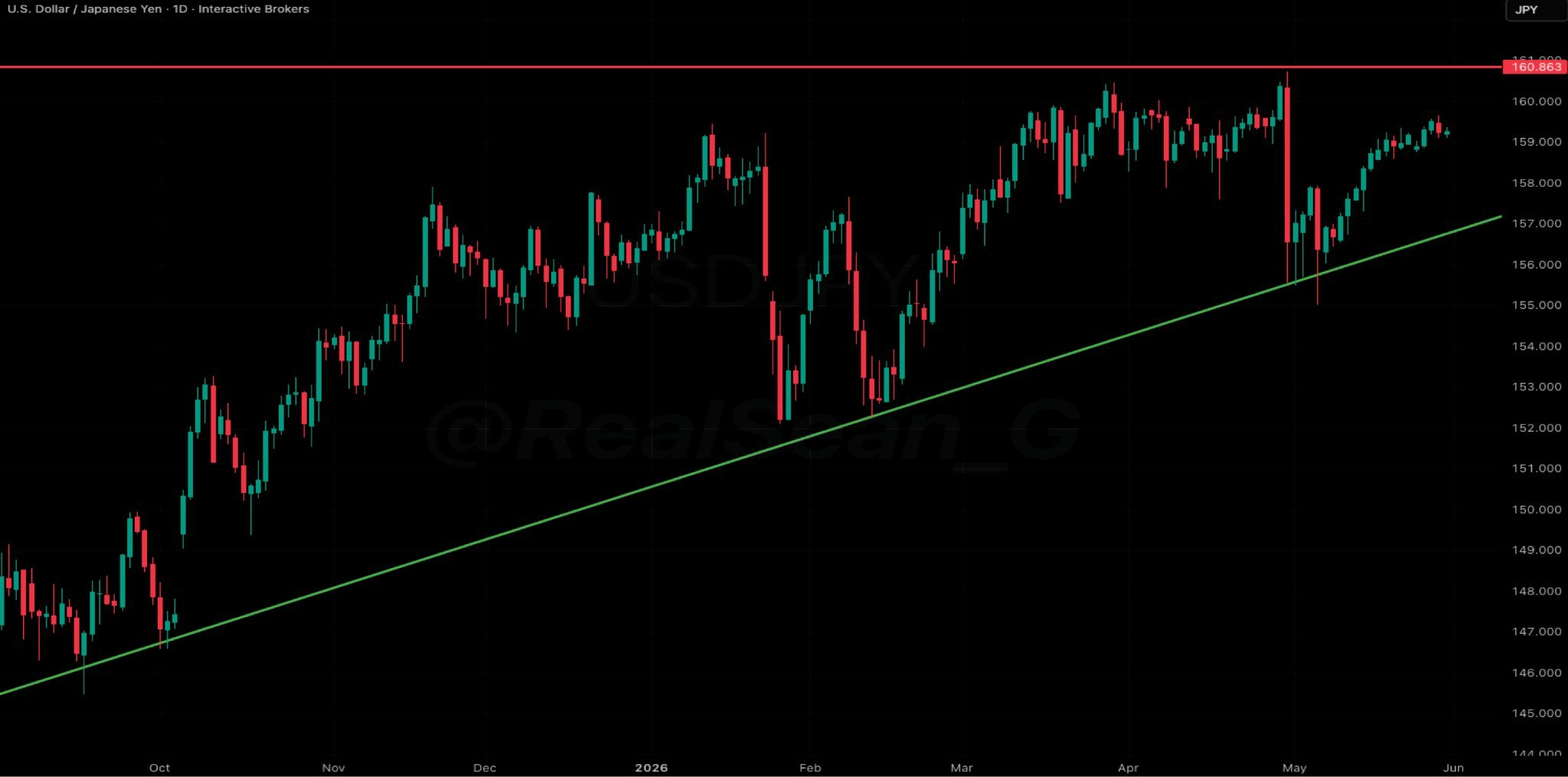
USDJPYAs mentioned, unless we see the Strait return to normal and/or a BOJ rate hike, USDJPY should break above 160. Yen has weakened back above 160 and is now approaching the recent high that triggered MOF intervention in late April.
The 160 area is the danger zone. The recent pullback in oil lowers one source of pressure on yen weakness, but rate differentials remain wide and could widen further. BOJ normalization is already largely priced in, so unless Japan delivers a real hawkish surprise, intervention alone is more likely to smooth volatility than reverse the trend.
USDJPY has seen intervention-driven pullbacks before, but the broader trend remained tied to rate differentials, dollar strength, and positioning. This setup is different from 2024, when BOJ hikes, MOF intervention, weak U.S. data, and broad dollar weakness all hit at once.
Next week's FOMC is critical. If the Fed hikes while the BOJ holds, USDJPY should face further upside pressure. On the other hand, a BOJ hike or another aggressive MOF intervention could quickly suppress the pair.
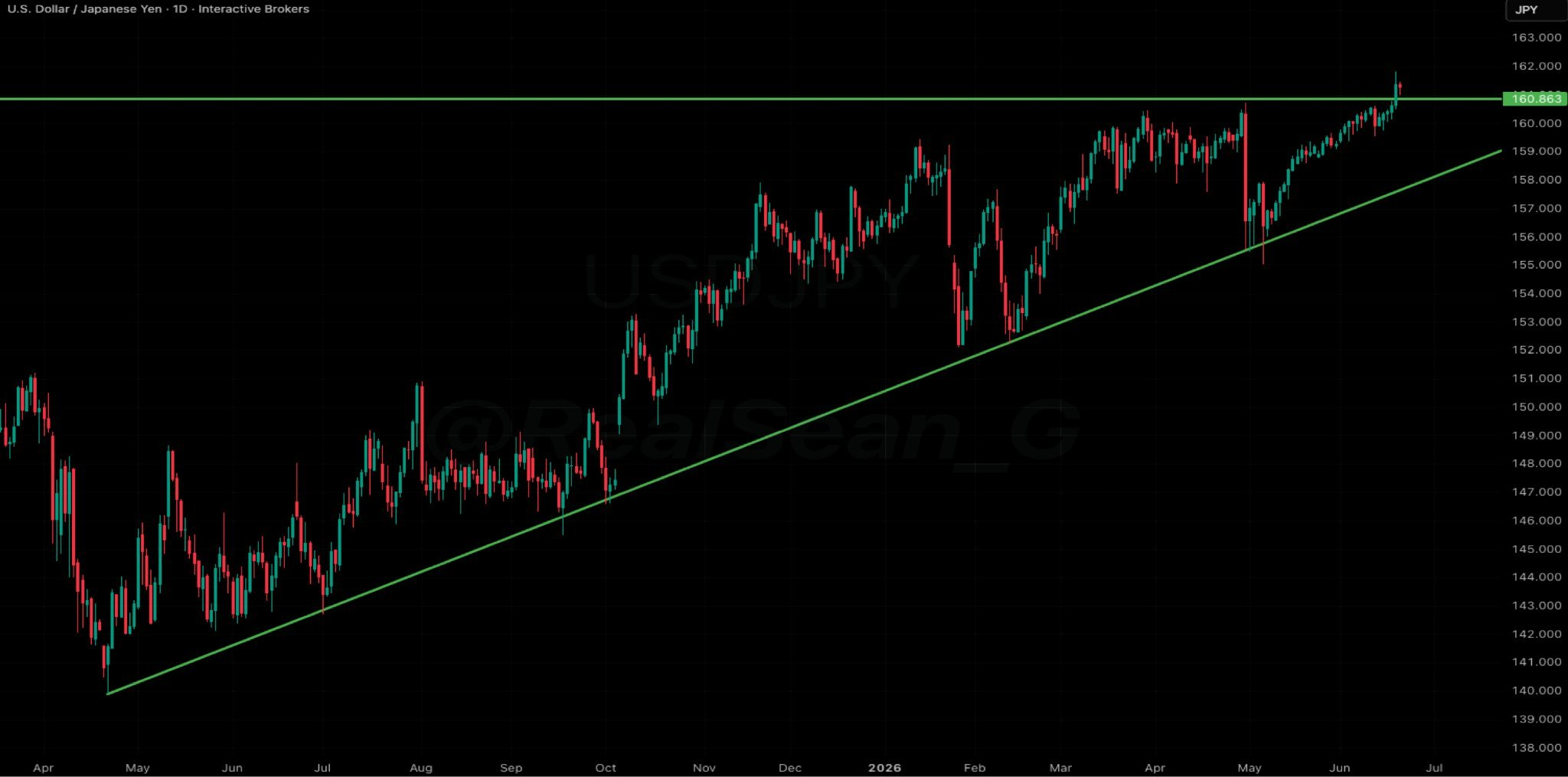
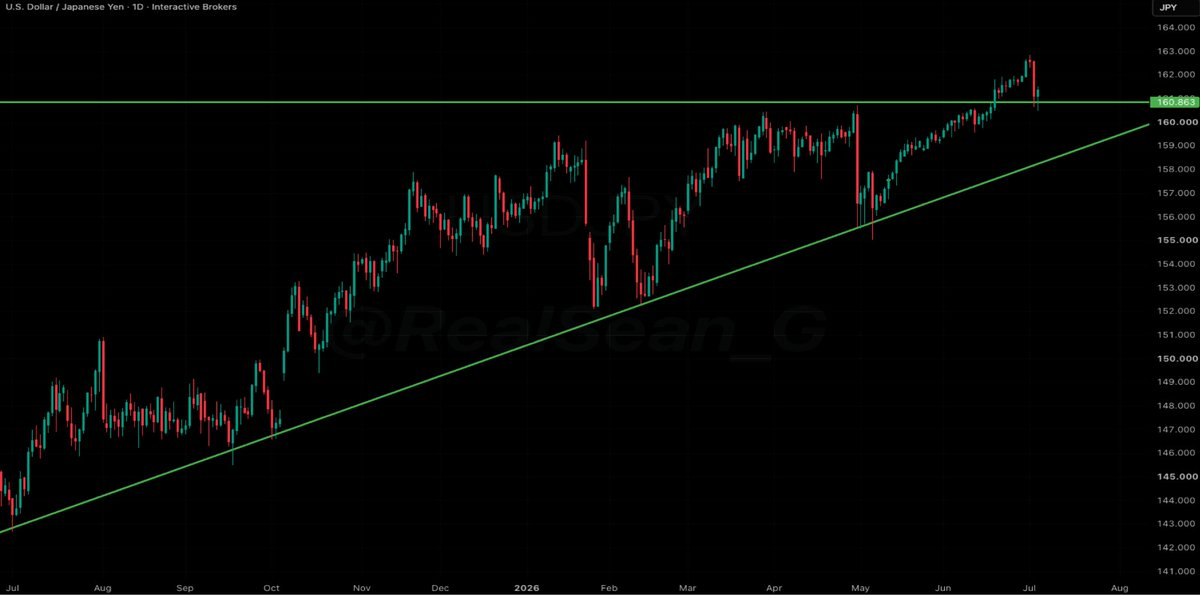
USDJPYUSDJPY cleared 160.86 and is now trying to turn that level into support. That makes 160.86 the line in the sand.
BOJ hiked this week, but the Fed is still at 3.50%-3.75%, leaving a 250-275 bps policy-rate gap, and the Fed is turning increasingly hawkish. Unless Japan hikes more aggressively, the path of least resistance remains higher.
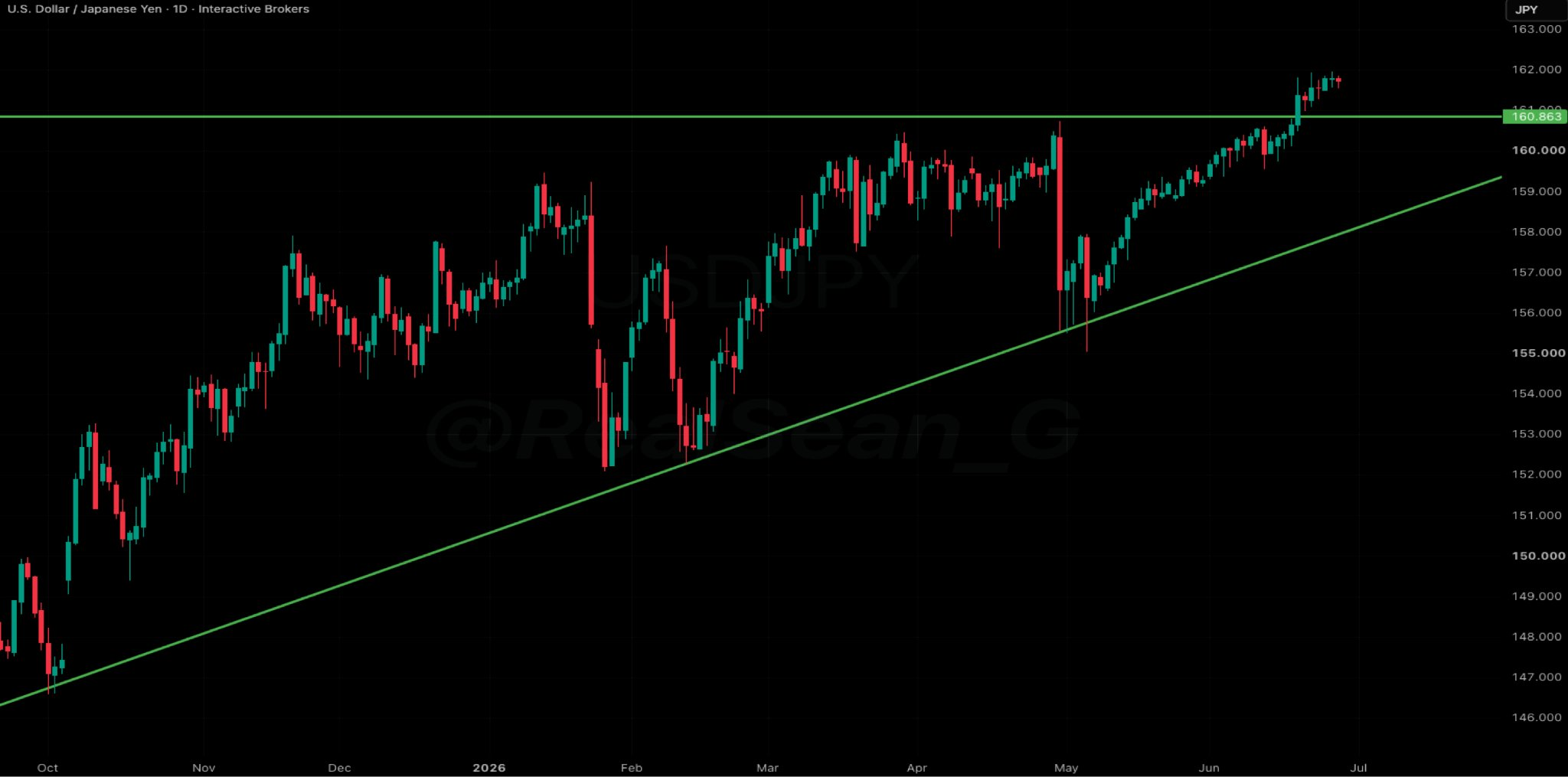
USDJPYThe BOJ hike has not changed the tape. Rate differentials are still too wide and the Fed is not giving the market a dovish turn. Unless MOF intervenes again, the path of least resistance remains to the upside. Unilateral intervention rarely succeeds, but coordinated intervention can have a more sustained effect. Without Washington on board, MOF can slow the move, as we saw in May, but it is unlikely to reverse the trend when fundamentals are still pointing the other way.
USDJPY
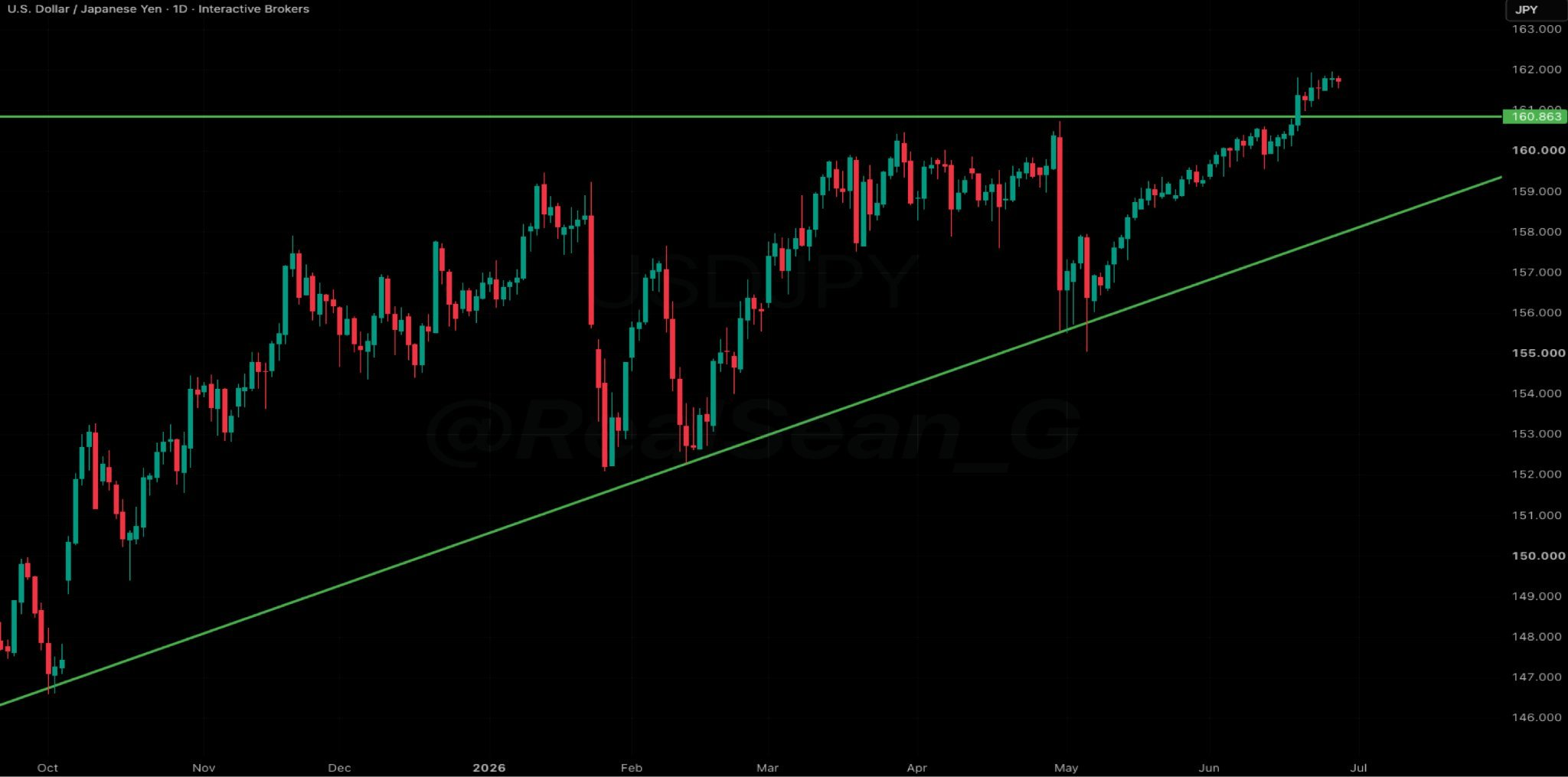
USDJPYUSDJPY fell back to our 160.8 support on Thursday after suspected MOF intervention showed up in the tape during Asia hours. It was then hit again by weak nonfarm payrolls, which added another leg of pressure on the dollar. I have warned before that the probability of intervention rises once USDJPY breaks above 160. That remains the line in the sand. As long as 160.8 holds, the broader uptrend remains intact, with price still above the rising trendline.
Japan needs three things to cap yen depreciation: lower crude prices, lower oil-product prices, and BOJ hikes. Crude has fallen back to pre-war levels, but oil-product prices remain elevated and the BOJ hiking magnitude is still not enough.
A sustained break below 160.8 opens the door to a retest of the rising trendline.
USDJPYIn late June, I wrote, "Unilateral intervention rarely succeeds, but coordinated intervention can have a more sustained effect. Without Washington on board, MOF can slow the move, as we saw in May, but it is unlikely to reverse the trend when fundamentals are still pointing the other way."
I put it more bluntly on July 25: "Unilateral intervention rarely changes the trajectory of a fundamentally driven currency move."
After Thursday's MOF intervention, I wrote that the cycle could be broken in only two ways. MOF could deploy enough firepower to push USDJPY low enough to trigger a self-reinforcing move lower, or the BOJ could hike aggressively and signal that more was coming. If neither happened, the third path was simple: the familiar cycle would repeat. USDJPY would grind back toward the YTD high, perhaps make a new high, MOF would intervene again, and the pair would eventually grind higher once more.
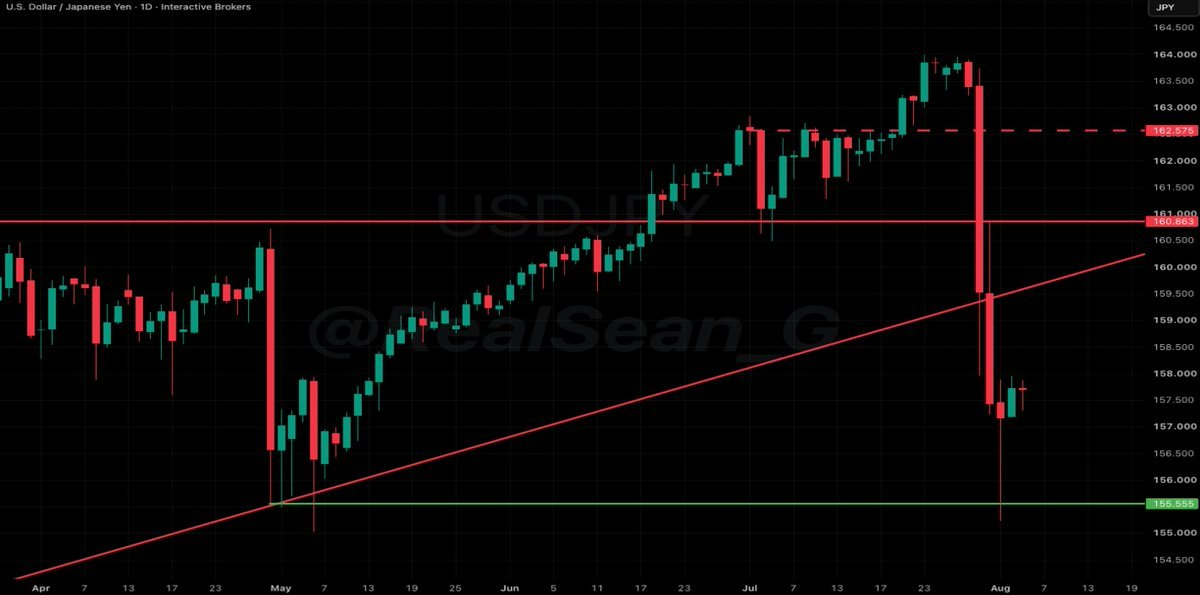
What I failed to include was a third cycle-breaker I had mentioned several times in the past: coordinated intervention with the U.S. On Friday, Washington joined. USDJPY then delivered its first decisive daily close below the long-term ascending trendline.
As I laid out after the April 30 intervention, intervention only becomes durable when official yen buying pushes USDJPY low enough that traders positioned against the authorities lose enough money to have no choice but to unwind. That forced unwind is what makes the move self-reinforcing. Until then, intervention remains highly susceptible to reversal, exactly as we saw from April through July.
Breaking the ascending trendline was the right move. Several Japan-only intervention rounds from April 30 through early May failed to secure a daily close below it. The first day Bessent joined the effort, it broke. As Trump's personal trading adviser, Bessent has undoubtedly helped Trump make key decisions when major assets were sitting at key technical levels. Trump and Bessent have repeatedly shown how effective they can be at reversing trends.
I was explicit about the level in May: "For USDJPY to initiate a self-reinforcing downward spiral, the BOJ must sustain a break below the 155.5 level for a few days."
We are not there yet. The trendline break is the first real change in the April-to-July sequence, but the setup is not complete. A sustained break below 155.5 for several days would raise the odds of the self-reinforcing downward spiral I described in May, but it would not make that outcome inevitable.
The oil-inventory cushion is far thinner than it was in April. OECD stocks fell by 135 million barrels in May and June, while the U.S. SPR is now more than 100 million barrels below its early-April level. With less inventory available to absorb another oil shock, the fundamental backdrop for the yen is less favorable than it was during the first intervention.

USDJPYAs I have said before, for an intervention to have a sustained effect, policymakers need to engineer a self-reinforcing spiral. In USDJPY, that means buying yen hard enough to force yen shorts into capitulation.
155.55 is the minimum level to monitor. If they fail to deliver that, we should see a gradual climb back toward 160 and eventually another ATH, because USDJPY fundamentals are now almost entirely dependent on oil prices, with oil inventories appearing to be at their lowest level since the 1970s.
From other publications
Loading related content…